
When Zoom Goes Down and Your Stream Depends On It: The Backup Plan That Saved My Show

You know that moment when you become aware that you’re completely dependent on something you can’t control?
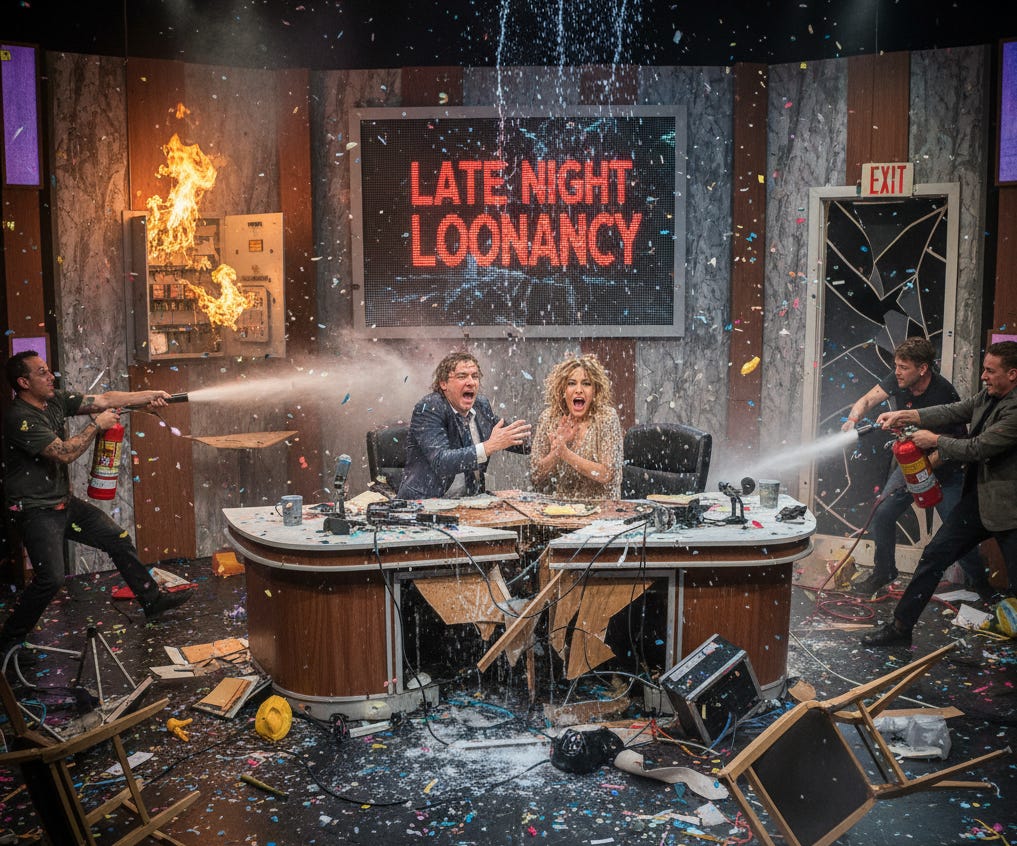
I had that exact realisation recently. Right in the middle of a live stream with Mark and Lisa, my co-hosts on the Creative Amplifiers Show . We were discussing the workflows and topic of ironically, “Bringing Guests On Your Show”.
The issue: I couldn’t admit my guests into my Ecamm-for-Zoom setup. My internet was fine. My equipment was fine. My guests were ready and waiting.
But Zoom, specifically Zoom’s European servers decided to have an wobble at the exact worst moment.
Regarding live streaming: your biggest vulnerability isn’t your skills or your content. It’s the platforms you depend on, completely outside your control, that can destroy your credibility in seconds.
The Dependency We All Ignore
I used to think having good internet and decent equipment was enough. Show up prepared, know your content, and everything else would fall into place, right?
Wrong. So very wrong.
What actually happens when you build your entire streaming setup around a single platform:
Your control is an illusion. I couldn’t get my guests into the room. Not because I did something wrong. Not because they weren’t tech-savvy. But because somewhere in a European data center, servers were having a bad day. And suddenly, my carefully planned show was hostage to infrastructure I couldn’t see, touch, or fix.
Your guests watch you panic. Mark and Lisa were waiting. Our audience was waiting. And I was stuck explaining that no, it’s not their internet, it’s not their settings, it’s not anything they can fix - it’s Zoom, and we’re all just sitting here hoping it comes back online. Multiple restarts of my Mac didn’t resolve it :-(
The reality? Your backup plan needs to account for platforms failing, not just your equipment or your internet.
The “Fix”
When Zoom’s European servers went down, I had three choices:
1. Cancel the show (credibility destroyed, guests disappointed)
2. Wait it out (audience loses interest, guests get frustrated)
3. Switch to a backup platform immediately (show continues, maybe slightly bumpy, but we’re live)
Guess which option I wish I’d been fully prepared for?
Well, not a fix specifically but a guest (or in my case a guest / co-host Mark) that was able to take control of the stream, get Lisa and me onto his stream and run the show from his remote studio.
What “Live Happens” Actually Means
Mark said something during the stream (that was thankfully up and running well and importantly, our audience stuck with us, Despite being 10 mins late) that perfectly captures this: “Things happen, that’s how life happens right, so live happens.”
He wasn’t just talking about my connectivity issues - though those were real. He was talking about the fundamental nature of live content: unpredictability is the only guarantee.
Lisa expanded on this on the show - the people who succeed are “flexible and open to new ideas.” When something’s “not working, you need to be okay with trying a different way till you get it where you want it, or you need to abandon it—and that’s okay too.”
But here’s what I learned the hard way: flexibility requires options. You can’t pivot to Plan B if you haven’t built a Plan B.
The Backup Systems That Actually Matter
Professional streaming isn’t about hoping your primary platform works. It’s about knowing exactly what to do when it doesn’t. Here is my Essential Backup Checklist ( you don’t need to have all of these but if you can, employ as many as possible):
Platform Redundancy
Primary streaming platform tested 30 minutes before go-live
Secondary platform account active and ready (StreamYard, Restream, Riverside)
Guests have backup platform link in advance
Test recording on backup platform done previously
Quick-switch procedure documented and rehearsed
Internet & Connection
Primary internet connection tested and stable
Secondary internet option ready (mobile hotspot, backup ISP, Speedify)
Ethernet cable connected (never rely solely on wifi)
VPN disabled (can interfere with streaming platforms)
Router restarted before important streams
Alternative Hosting Arrangements
Co-host briefed on taking over if platform fails (as you now know this was my choice)
Solo segments prepared that don’t require live guests
Pre-recorded intro/outro ready to play during platform switches
Guest informed they might need to switch platforms mid-stream
Clear decision tree: how long do we wait before switching?
Guest Services & Communication
Multiple ways to contact guests (email, phone, WhatsApp, text)
Back-Channel Communication
Private WhatsApp or text group with co-hosts active during stream
Someone monitoring social media for “is the stream working?” comments
Production assistant ready to communicate with guests separately
Phone numbers for all participants in easy reach
Agreed-upon hand signals or keywords for “switch platforms now”
Cancellation & Rescheduling Protocols
Email templates ready for last-minute cancellations
Rescheduling process documented (what timeframes work?)
Audience notification ready (social media, email list)
Apology statement pre-written and customisable
Make-good strategy defined (bonus content, extended episode)
The Unglamorous Truth About Professional Streaming
Professional streaming isn’t about having the fanciest equipment. It’s not about perfect lighting or viral content ideas.
It’s about having systems that keep you live when the platforms you depend on fail.
During our stream, when Zoom’s servers went down, we had a choice: panic or pivot. The only reason pivoting was even possible was because we’d thought about a backup strategy before. Not perfectly executed - I’ll be honest, it was still stressful but we had options.
What’s Your “Platform Fails” Plan?
Think about your last live stream or important video interview. Now imagine your primary platform completely fails:
The servers are down
You can’t admit guests
Your software crashes and won’t restart
Your recording is corrupted
What happens next?
If the answer is “desperately Google for alternatives while my guests wait,” you don’t have a backup plan, you have chaos.
The creators who seem “lucky” aren’t lucky. They’re prepared. They’ve thought through the disaster scenarios and built systems to handle them. They’ve tested backup platforms before they needed them. They’ve earned their audience’s trust by proving they can deliver value even when the platforms fail them.
The tools and techniques I used when I started streaming are completely different from what I use now. Not because the old ways were wrong, but because adaptation and redundancy are part of the job. Your backup plan today will evolve, and that’s exactly how it should be.
But you need a backup plan today to start with.
Drop a comment and let’s talk about the platform failures that caught you off guard, or the backup strategies that saved your streams. We’re all building this playbook together.
Your scenario has just frightened the life out of me! I have been ok when I was having fun with it but now it is nearing 'plunge' time I realise I haven't got a clue!!!!!!!